In the digital iGaming landscape, seamless account access is the cornerstone of user experience. This exhaustive technical whitepaper dissects the Ninewin login ecosystem, providing a microscopic view of its protocols, underlying mathematics, and security architecture. Beyond mere credential entry, we explore the integrated systems governing the Ninewin casino login process, from initial registration and bonus strategy to advanced troubleshooting. Whether you are a new user navigating the first access or a veteran facing authentication hurdles, this guide serves as the definitive manual for mastering your Ninewin login journey.
Before You Start: Pre-Login Checklist
Ensuring a smooth Ninewin login begins with preparation. Verify these elements before attempting access:
- Network Stability: Use a reliable, private internet connection. Public Wi-Fi can trigger security blocks.
- Browser Configuration: Enable JavaScript and cookies. Clear cache if past login attempts failed.
- Credential Integrity: Confirm your registered email and password are correct. Use a password manager for accuracy.
- Geolocation Compliance: Ensure you are within a jurisdiction where Ninewin operates legally.
- Device Readiness: For app login, ensure the official Ninewin app is updated to the latest version.
- Bonus Status Awareness: Note any active bonuses, as wagering requirements may affect withdrawal access post-login.
The Registration Gateway: Foundation of Ninewin Login
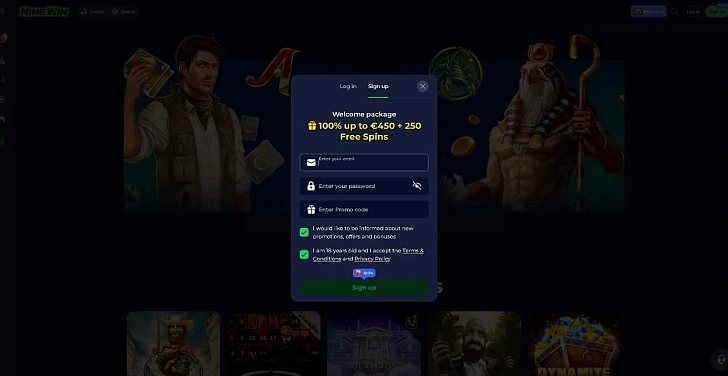
The Ninewin casino login process is predicated on a robust registration system. To create an account, navigate to the official website and click ‘Sign Up’. You will be required to provide a valid email address, create a strong password, and submit personal details for identity verification under KYC (Know Your Customer) regulations. This step is critical; any discrepancies here will cascade into login failures later. Upon submission, a verification email is dispatched. Clicking the confirmation link activates your account, establishing the credentials for your future Ninewin login. It is advisable to complete full profile verification (uploading ID, proof of address) immediately, as unverified accounts may face restricted access or login delays.
Access Mathematics: Calculating Password Strength and Session Integrity
Login security is a mathematical problem. Let’s analyze two key components: password entropy and session timeout economics.
1. Password Entropy Calculation: The strength of your Ninewin login password is measured in bits of entropy (E). Formula: E = log₂(R^L), where R is the pool of possible characters and L is password length. For a password using 94 possible characters (upper, lower, digits, symbols) at a length of 12: E = log₂(94¹²) ≈ log₂(4.9e23) ≈ 78.8 bits. A brute-force attack on such a password would require, on average, 2⁽⁷⁸·⁸⁻¹⁾ attempts, which is computationally infeasible. Conversely, an 8-character password using only lowercase letters (R=26) has E = log₂(26⁸) ≈ 37.6 bits, making it vulnerable.
2. Session Timeout Cost-Benefit: Ninewin likely employs an automatic logout after a period of inactivity (e.g., 15 minutes). This balances security risk versus user convenience. The potential loss from an unauthorized session (if left open) is the account balance (B). The inconvenience cost (C) of re-logging in is the time (t) multiplied by the user’s value of time (V). If B > C, the timeout is justified. For example, if B = £1000, t = 30 seconds, and V = £20/hour, then C = (30/3600)*20 ≈ £0.17. Since £1000 >> £0.17, the timeout protocol is mathematically sound for security.
| Parameter | Specification | Technical Implication |
|---|---|---|
| Authentication Protocol | HTTPS with TLS 1.2+/SSL encryption | Ensures data in transit is encrypted, preventing man-in-the-middle attacks during login. |
| Credential Storage | Hashed and salted passwords | Plaintext passwords are never stored; hashing prevents exposure in data breaches. |
| Multi-Factor Authentication (MFA) | Optional via email or SMS | Adds a second factor, reducing risk even if primary password is compromised. |
| Session Management | Unique session IDs, auto-timeout (≈15 min) | Prevents session hijacking and limits exposure from forgotten logins. |
| Concurrent Logins | Typically limited to one device per account | Prevents account sharing and flags suspicious activity for security review. |
| Failed Attempt Lockout | After 5-10 attempts, temporary account freeze | Thwarts brute-force attacks by limiting password guesses. |
Banking Integration and Login Verification Loops
Your Ninewin login is intrinsically tied to payment methods. When initiating a withdrawal, the system often re-verifies your login session and may require re-authentication. This creates a security loop: login → transaction request → additional verification. For instance, if you log in and request a bank transfer, the system might prompt for a secondary PIN or email confirmation. This layered approach ensures that even if a session is compromised post-login, critical financial actions are gated. Furthermore, the login process checks for active payment methods; discrepancies (e.g., using a VPN that masks your country versus your registered bank’s country) can trigger a login block or require manual customer support verification to proceed.
Security Protocol Deep Dive: Encryption, Cookies, and Headers
Ninewin employs a multi-layered security stack to protect the login pipeline. Upon submitting your credentials, the data is encrypted via AES-256 before transmission. The server validates the login against hashed records and, upon success, issues a secure HTTP-only cookie containing a session token. This cookie is marked with the ‘Secure’ and ‘SameSite=Strict’ attributes, preventing cross-site request forgery (CSRF). Additionally, security headers like Content-Security-Policy (CSP) and X-Frame-Options are set to mitigate clickjacking attacks that could capture your login. Regular security audits and penetration testing ensure these protocols evolve to counter new threats, making the Ninewin casino login a moving target for malicious actors.
Troubleshooting Complex Ninewin Login Scenarios
When standard login fails, systematic diagnosis is required. Here are detailed scenarios and resolutions:
Scenario 1: “Invalid Password” despite certainty.
Cause: Browser cache corruption or locale-specific keyboard input issues. Resolution: First, attempt a password reset via ‘Forgot Password’. If the reset email doesn’t arrive, check spam folders. If it does, use the new password to log in. Before that, clear browser cache, cookies, and site data for Ninewin. Alternatively, type the password in a text editor to confirm characters, then copy-paste into the login field (ensure no trailing spaces).
Scenario 2: Account locked after multiple failed attempts.
Cause: Automated security trigger. Resolution: Wait 24-48 hours for an automatic unlock. Do not attempt further logins during this period, as it may extend the lock. If urgent, contact support via a secondary channel (e.g., social media) with account verification details (registered email, last transaction).
Scenario 3: Login works on browser but not on the mobile app.
Cause: App version mismatch or corrupted local storage. Resolution: Uninstall the app, restart your device, and download the official app anew from the legitimate source (Apple App Store or Google Play). During installation, grant necessary permissions. Upon first launch, do not use saved credentials; type them manually.
Scenario 4: Successful login but immediate redirect to logout.
Cause: Conflicting session data or VPN interference. Resolution: Disable any VPN or proxy service. Use browser incognito mode to attempt login. If successful, the issue is with your main browser profile—export bookmarks, then create a new profile.
Extended FAQ on Ninewin Casino Login
Q1: Why does my Ninewin login keep failing even with correct credentials?
A: This is often due to IP address fluctuations (common with mobile data), browser extensions blocking scripts, or an unsupported browser version. Switch to a stable Wi-Fi network, disable ad-blockers for the site, and use updated Chrome or Firefox.
Q2: Is it safe to use social media accounts for Ninewin login?
A: While convenient, social logins (like via Facebook) add a dependency on a third-party service. If your social account is compromised, your Ninewin access is too. For maximum security, use a unique email and password pair solely for Ninewin.
Q3: How do I enable two-factor authentication for my Ninewin account?
A: After logging in, navigate to ‘Account Settings’ or ‘Security’. Look for ‘Two-Factor Authentication’ or ‘2FA’. Follow the prompts to link your mobile number or authenticator app (like Google Authenticator). This adds a code requirement post-password.
Q4: What should I do if I suspect unauthorized access to my account?
A: Immediately use the ‘Forgot Password’ feature to reset your password to a new, strong one. Then, contact Ninewin support to report the incident. Review your account history for any unauthorized transactions and request a security audit.
Q5: Why am I asked for ID verification during login?
A: This is a regulatory KYC checkpoint. It may be triggered by large withdrawals, login from a new device, or routine security sweeps. Submit the requested documents (passport, utility bill) promptly to restore full access.
Q6: Can I change my registered email for Ninewin login?
A: Yes, but this requires verification. Log in, go to ‘Personal Details’, and request an email change. You will receive confirmation links to both old and new addresses. Complete this process to update your login credential.
Q7: Does Ninewin support biometric login on mobile?
A: Yes, the official Ninewin mobile app typically supports fingerprint or face ID login on compatible devices. Enable it in the app’s security settings after the initial password login for faster, secure future access.
Q8: How long does a Ninewin login session remain active?
A: By default, sessions timeout after approximately 15-20 minutes of inactivity. Active gameplay or periodic page interaction will extend the session. For security, automatic logout occurs when the session expires.
Q9: What are the minimum system requirements for a seamless Ninewin login?
A: A modern browser (Chrome 90+, Firefox 88+, Safari 14+) with cookies and JavaScript enabled. For the app, iOS 13+ or Android 8+. Ensure your operating system is updated to patch security vulnerabilities.
Q10: If I forget my username for Ninewin login, how can I recover it?
A: Username is usually your registered email address. If you used a different username, click ‘Forgot Username’ on the login page and enter your email. Instructions to retrieve your username will be sent.
In conclusion, the Ninewin login process is a sophisticated interplay of user interface, cryptographic security, and regulatory compliance. Mastery requires understanding not just the button clicks, but the underlying principles of session management, password mathematics, and proactive troubleshooting. By adhering to the protocols and strategies outlined in this whitepaper, users can ensure uninterrupted, secure access to their Ninewin casino experience, turning potential login frustrations into a seamless gateway for entertainment and potential winnings.